
Home / Consultancy / Hand-Arm Vibration
Hand-Arm Vibration
Assessments
Protect your people.
On-site HAV tool testing, daily exposure calculations and practical advice to help you manage vibration risks. Get a clear assessment built around the tools and tasks your employees use.
Tool measurements · Trigger-time guidance · Clear reports and recommendations
Looking for employee HAVS health checks? See our partner support below.

Simon Rehill AMIOA
Noise & vibration consultant
IOA Diploma in Acoustics and Noise Control
Technical Member of IOSH
Registered with BOHS









From tool measurements
to practical controls.
A useful hand-arm vibration risk assessment connects vibration levels with actual tool use. We explain the findings so you can plan work, prioritise improvements and brief your team.
On-site tool vibration testing
Measurements of agreed tools and tasks under representative working conditions, with tool identification and relevant operating details recorded.
Daily exposure calculations
Assessment of A(8), the daily vibration exposure, using representative vibration values and trigger times. We consider combined exposure when employees use several tools.
Trigger times and exposure points
Clear information on exposure points and calculated times to the action and limit values, helping you understand each tool’s contribution to daily exposure.
Practical exposure controls
Advice on tool selection, maintenance, consumables and working methods, alongside ways to reduce the time employees are exposed to vibration.
A written assessment report
Tool results, exposure estimates, assumptions and recommendations brought together in a report you can use to manage vibration risks.
Priorities for your team
Identify which tools, tasks and users need attention, with recommendations to support staff information, work planning and review of your controls.
Does your team regularly
use vibrating equipment?
Hand-arm vibration can reach employees through powered hand tools, hand-guided equipment and workpieces held against vibrating machinery. Repeated exposure can damage health.
- Grinders, sanders, polishers and impact tools.
- Drills, breakers, saws and cutting equipment.
- Hand-guided compactors and grounds maintenance tools.
- Several different tools used by one employee during a shift.
We can discuss HAV assessments for engineering, manufacturing, construction, vehicle repair, woodworking and grounds maintenance. Based in Scarborough, we support sites across Yorkshire and the UK.
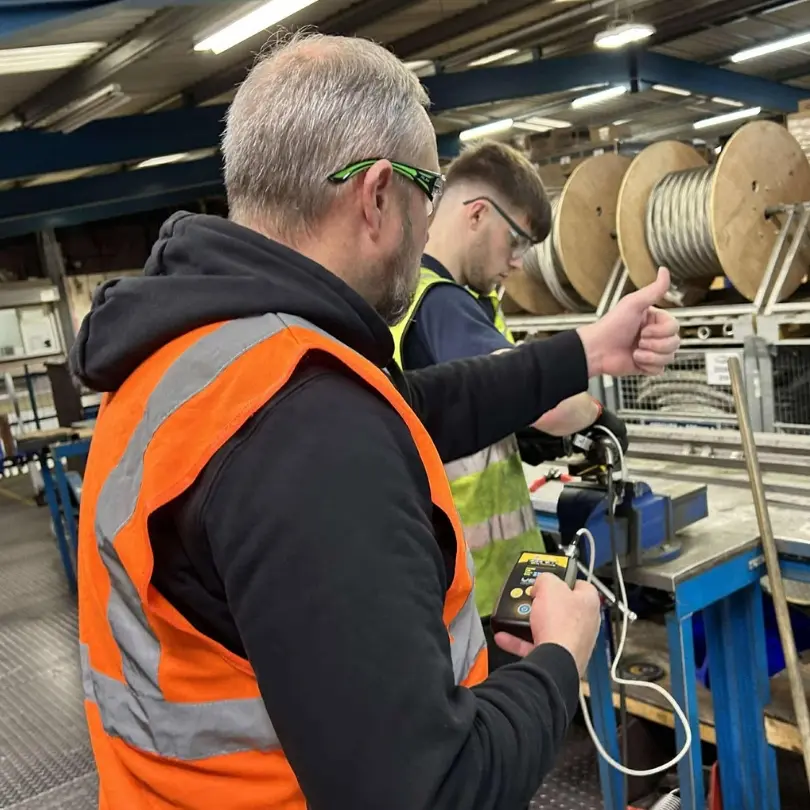
Practical measurements using your tools and working methods.
A clear route from
enquiry to action.
Tell us what you use
Send your site location, tool list and an outline of the tasks. We agree the assessment scope and quote, including any combined noise assessment.
Assess representative work
We arrange access to the tools, operators and materials needed. Measurements and discussions about trigger time help establish realistic exposure estimates.
Put the findings to work
Receive a clear report explaining the results and recommended controls. We can discuss the findings to help you plan your next steps.
What do the HAV exposure values mean?
The Control of Vibration at Work Regulations 2005 set the following daily hand-arm vibration exposure values in Great Britain.
100 exposure points
At this daily exposure, introduce technical and organisational measures to reduce exposure.
400 exposure points
Daily exposure must not exceed this value. Plan and control work to prevent an exceedance.
A(8) expresses daily exposure relative to an eight-hour reference period. It is not simply a tool’s vibration reading. Exposure depends on vibration magnitude and the time the hands are exposed; contributions from different tools add together.
A calculated time to the action or limit value is not a guaranteed safe operating time. These values do not separate safe from harmful exposure, and risks still need to be reduced as far as reasonably practicable.
Sources: HSE vibration regulations and HSE exposure calculator guidance.
Looking for HAVS
health checks?
“HAVS testing” can refer to employee health surveillance as well as tool testing. Our HAV assessment evaluates tools, tasks and exposure. Medical assessment and diagnosis require suitably qualified occupational health professionals.
If you need employee health checks, we can help arrange support through our UK partners, including Tier 1 to Tier 4 HAVS services. Tell us your location and staff numbers when you enquire.
Keep exposure control
and health checks connected.
HSE requires health surveillance where employees are likely to be regularly exposed above the action value despite controls, or are at risk for another reason.
Employees reporting tingling, numbness or finger blanching should report symptoms promptly and be referred for occupational health advice.
Before you book your HAV assessment.
How much does a hand-arm vibration assessment cost?
The quote depends on your site, tool numbers, tasks and the measurements needed. Send a tool list, postcode and approximate number of users. Include any need for noise measurements or employee health checks so we can scope the work clearly.
What should we prepare for the visit?
Have the agreed tools, normal accessories and representative materials available, with operators who can demonstrate typical tasks. A tool register and realistic information on use during the working day help us assess exposure.
What is trigger time?
Trigger time is the time a worker’s hands are actually exposed to vibration. It can be much shorter than the whole task or shift because setup, handling and breaks may involve no vibration exposure.
Can we use manufacturers’ vibration figures?
Relevant, representative information can support an assessment, and measurements are not always necessary. Declared emission values may differ from vibration during your work. We can discuss whether your existing data is suitable or on-site testing would be useful.
How often should we review the assessment?
Review it when tools, tasks or exposure patterns change, when health information indicates a concern, or when its validity is in doubt. Check regularly even without obvious changes; HSE advises not leaving more than about two years before checking whether a review is needed.
Does the same tool always have the same exposure time?
Calculated times depend on the vibration value used, the task and working conditions. A worker using other vibrating tools has additional exposure, so a single-tool calculation must not be treated as a fresh allowance for each tool.
Can noise and vibration be assessed together?
Yes. If your tools or activities also create noise risks, we can discuss a combined Noise at Work and Hand-Arm Vibration assessment. Mention both when requesting a quote so the scope and visit arrangements cover your needs.
How long will the testing and report take?
This depends on tool numbers, access and the range of operating conditions to assess. We agree the visit arrangements and expected reporting timescale when scoping your assessment. Let us know about any audit or project deadline.
Further guidance: HSE vibration risk assessment and measurement and monitoring.
More support for your workplace.
Hand-arm vibration calculator
Explore how vibration values and trigger times contribute to daily exposure. Use representative data.
Noise at Work assessments
Understand noise exposure from tools, machinery and workplace activities.
Noise & vibration training
Build your team’s knowledge of measurements and risk assessments.
Tell us about your tools.
Send your postcode, tool list and a brief description of the work. We’ll help you establish the right assessment scope.